Legacy Soil & Stone — Master Proposal
Describes what Legacy Soil & Stone is, what it would cost to launch, and how the unit economics work.
1. The business in one paragraph
Legacy Soil & Stone is a regional memorial business in North Georgia operating two streams that share a single workshop.
Stream A — Memorial Stones is a cremains business. Any cremains, pet or human, are processed through the Pearl Method. A pan-tilted aggregator turns cremains into various-size pearls when a mineral binder is applied. The pearls are then hand-painted with a slurry of cremains and natural pigments, polished, and sealed. This is an artisan line that produces tangible, display-worthy products. Stream A accepts both pet and human cremains; the Pearl Method works the same whether the input is a hamster, a schnauzer, or a human, and pricing is set by cremains weight.
Stream B — Memorial Soil is a pet-only business by choice, licensed under Georgia mortality composting law (O.C.G.A. 4-5). Companion animals up to 40 lbs are processed through Natural Organic Reduction (NOR) in commercial vessels, then cured in hand-built cedar vessels for a 45-day stabilization phase. The cured soil and its vessel are returned to the family as a ready-to-plant memorial. Whole-body human NOR is legal in Georgia (Senate Bill 241, 2025); Legacy Soil & Stone has no plans to enter that market.
2. The Pearl Method
Cremains are loaded into a pan-tilted aggregator with a fine mist of a mineral binder. The pan rotates and the cremains form into pearls 25-40 mm in diameter — between marble-sized and small golf-ball-sized.
Pearl yield scales with cremains volume:
- Smallest orders (partial keepsake portion): 2-10 pearls
- Mid-range orders: 20-45 pearls per batch
- Largest orders: 70-90 pearls per batch
Pearls are removed from the aggregator and cured. They are then hand-painted with a slurry of cremains and natural pigments (mica, pearlescent, North Georgia mineral oxides), polished, and finished with a clear sealing coat.

Per-tier pearl yield numbers are working ranges. Final yield calibrates as production volume builds.
3. Stream A catalog
Five tiers, weight-based. No separate intake fee — granulation, sieving, and chain-of-custody labor is built into the tier price.
| Tier | Cremains | Typical source | Pearls (approx.) | Price |
|---|---|---|---|---|
| XS | < 0.5 lb | Partial keepsake portion; small pet — hamster, reptile, parakeet | 2-10 | $250 |
| S | 0.5-1 lb | Cat or small dog; partial keepsake of a larger animal or human | ~25 | $475 |
| M | 1-2 lb | Mid-size dog; partial keepsake of a large dog or human | ~45 | $695 |
| L | 2-4 lb | Large dog, full keepsake portion of a human | ~70 | $995 |
| XL | 4-9 lb | Full pet cremation up to ~80 lb live weight; full human cremation | ~85 | $1,295 |
Acceptance cap: 9 lb of cremains. A 300-lb adult human cremation typically yields about 9 lb of remains, so this cap covers any normal human or pet cremation. Anything beyond 9 lb is by special arrangement only — keeps Stream A focused on family memorial work and out of livestock or non-mammalian-pet processing.
4. Stream B catalog (private NOR)
Three tiers, weight-based. Pricing scales with vessel cycle complexity. Every tier returns the same standardized 1.5 cu ft of finished memorial soil in the same hand-built cedar planter — the artisan piece is what's consistent, not the volume.
| Tier | Pet weight | Vessel cycle | Return | Price |
|---|---|---|---|---|
| Tiny | < 10 lbs | JK270 dual-chamber | 1.5 cu ft + cedar planter | $475 |
| Small-Medium | 10-30 lbs | JK400 dual-chamber | 1.5 cu ft + cedar planter | $675 |
| Large | 30-40 lbs | JK400 full capacity | 1.5 cu ft + cedar planter | $895 |
Every tier delivers the cured soil in a hand-built Western cedar planter — the same standardized design that served as its 45-day curing chamber, returned to the family ready to plant.
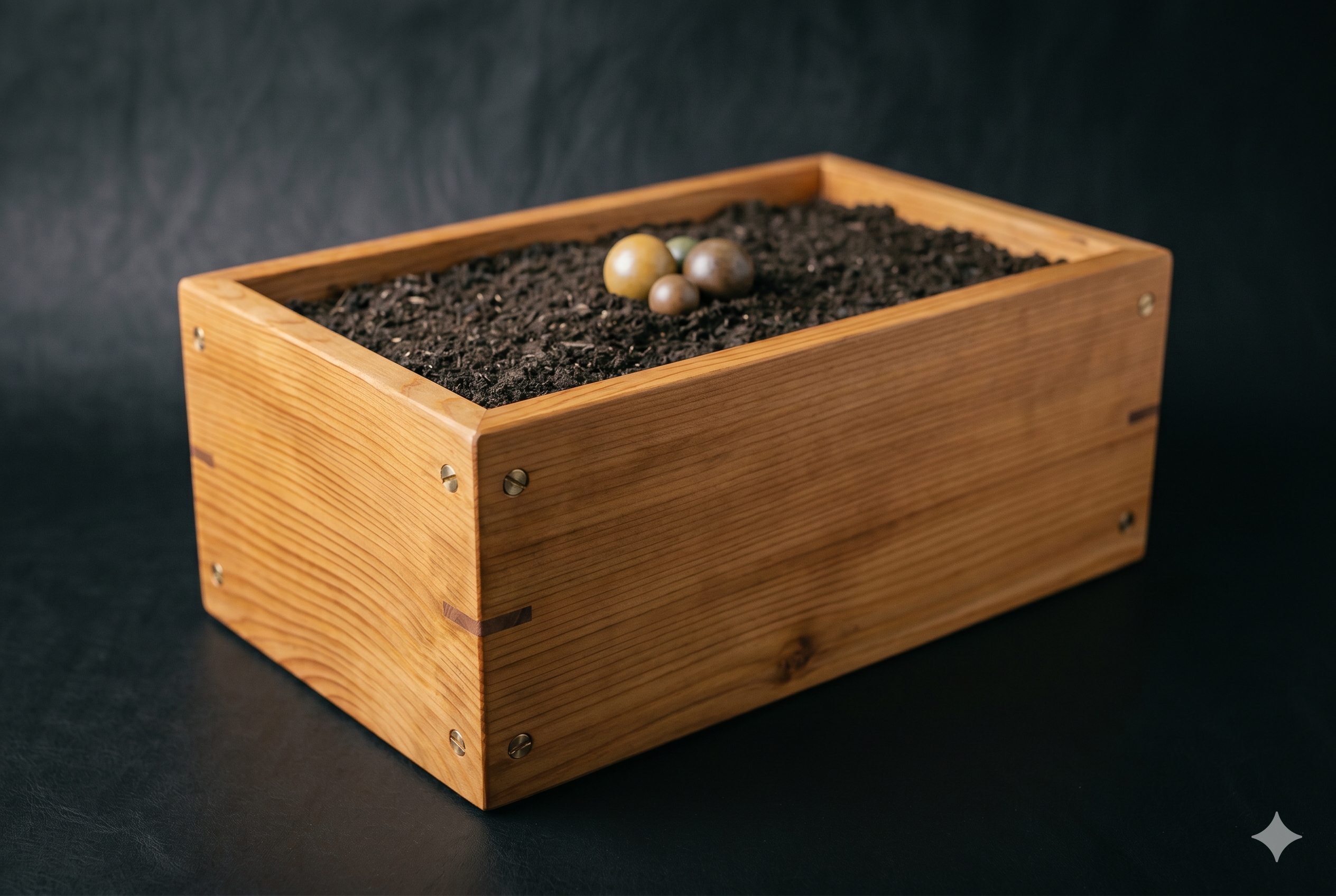
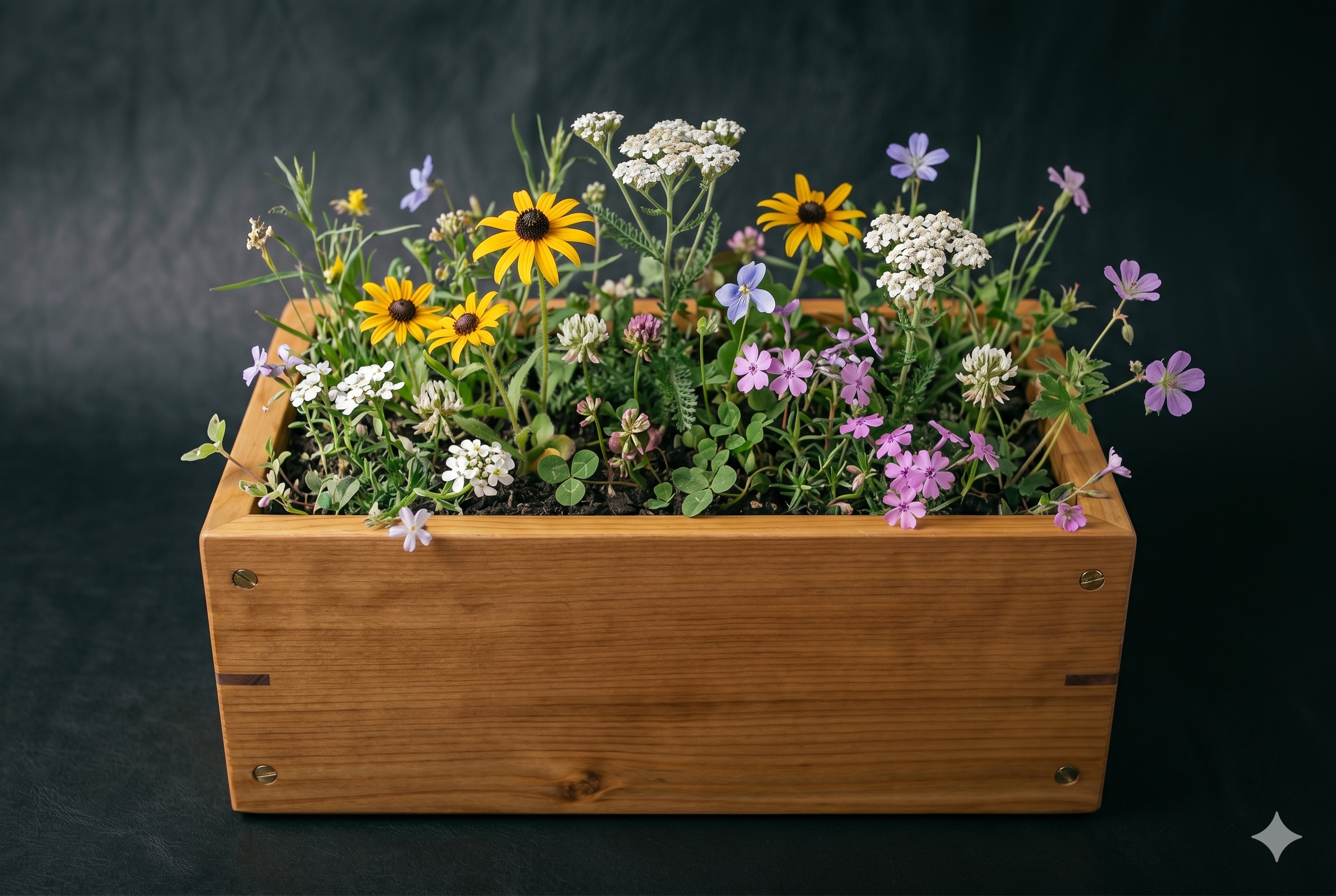
Why standardized: a 40-lb dog can yield 2.5-3 cu ft of soil, which would push shipping into freight territory and create wildly variable customer cost. Standardizing the return at 1.5 cu ft (a large bag of premium garden soil, ~45-55 lbs in a standard FedEx box) keeps shipping predictable, simplifies the workshop's packaging line, and makes the product visually consistent regardless of pet size. Surplus from larger pets goes into the Mother Pile — the active hot inoculant pile at the workshop that seeds new vessel cycles. Finished memorial soil is also used on-site to plant the Unconditional Forest, the memorial grove on the property. No remains are ever discarded; the surplus has a home.
Stream B is pets only by choice. Whole-body human NOR is legal in Georgia under SB 241 but is not a Legacy Soil & Stone offering. The Pearl Method (Stream A) carries the human cremains use-case.
For families who don't want a private NOR vessel, see Line 3 — Community Composting below: pets can be composted communally with shelter animals at $150, with all net proceeds donated to shelter partners.
5. The four service lines
Two money-making lines and two community-aligned lines.
| Line | What | Type |
|---|---|---|
| Line 1 — Memorial Stones | Stream A: Pearl Method, hand-painted pearls. Direct retail, weight-tiered $250-$1,295. | Money-making |
| Line 2 — Memorial Soil | Stream B: pet-only private NOR, standardized 1.5 cu ft return + cedar planter. Direct retail, weight-tiered $475-$895. Surplus from larger pets feeds the Mother Pile (hot inoculant) at the workshop; finished soil also plants the Unconditional Forest memorial grove on-site. | Money-making |
| Line 3 — Community Composting | Two-part program: (a) zero-revenue mortality intake from rural-shelter partners (shelter animals composted in bulk for free). (b) Community participation: pet owners who don't want a private NOR vessel can opt into a communal composting batch with shelter animals for $150, receiving back a labeled bag of finished soil. All net proceeds donate directly to participating shelter partners. Operated as a community-service program inside the for-profit. | Service / pass-through to shelters |
| Line 4 — Academic Outreach | Pure outreach to university partners (UGA Extension, Auburn, Appalachian State, Berry College). Pairs naturally with Line 3 — Line 2's controlled curing environment plus Line 3's volume gives institutional partners real-world data they cannot replicate in a lab. Not a revenue line. | Service |
6. Unit economics
Stream A blended margin lands at ~90% across the five tiers. Stream B blended margin lands at ~87.6%; the standardized hand-built cedar planter is the cost driver. Operator labor flows through Schedule C profit, not COGS.
Year 1 = 120 Stream A + 36 Stream B orders (10/month + 3/month). Year 2 ramps to maturity at 2.5× Year 1 volume. Year 3+ holds at Year 2 steady-state — the brand is built around a workshop pace, not a growth pace.
Revenue: $111K Year 1 → $278K Year 2 → $278K Year 3+. Operating profit (Schedule C, after marketing, insurance, merchant fees, accounting, depreciation, and other operating costs): ~$73K → ~$211K → ~$211K. After self-employment tax, federal and GA income tax, and self-employed health insurance, effective operator take-home: ~$45K Year 1 → ~$138K Year 2+.
Detailed COGS, projected volumes, capital plan, the per-tier breakdown, and the operator's tax & benefit load are in the companion financials report: Legacy Soil — Financials.
7. Operating plan — Month 1 through Month 6
The first six months are a deliberate validation phase. Volume is intentionally small. Equipment and process get tested. Every step is documented.
- Month 1 — Workshop setup & Batch Zero. Workshop fit-out completed. Aggregator pan, painting bench, and curing room dialed in. Batch Zero processes a non-customer practice cremation (symbolic input) end-to-end through the Pearl Method to validate process.
- Month 2 — First three customer orders. Friend-and-family Stream A pilots and one Stream B pilot from a local shelter referral. Every step photographed for chain-of-custody. Customer satisfaction interview after delivery.
- Month 3 — Vet & shelter partnership pilot. Three to five North Georgia veterinary clinics introduced to Stream B referral pathway. Two rural shelter partners onboarded for Line 3 community-composting batches.
- Month 4 — First full month at projected volume. Target ~10 Stream A + 3 Stream B orders. Tracking actuals against forecast. Refining intake forms, packaging, and shipping protocol.
- Month 5 — Funeral home reseller pilot. Two to three NW Georgia funeral homes introduced to Stream A as a hand-painted memorial alternative for families who request something tangible. Reseller pricing structure tested.
- Month 6 — Validation review. Six-month numbers reviewed against the Year 1 forecast. Customer satisfaction surveys aggregated. Regulatory feedback from GA Funeral Service Board and GA EPD compiled. Decision point: continue at validation pace, ramp toward Year 2 forecast, or pause and revise.
Operator capacity during validation phase: Year 1 is the bridge year. Batches are scheduled on weekends and evenings around an existing primary commitment, with intake calls handled in a scheduled response window. The 13-orders-per-month Year 1 baseline is calibrated to be deliverable at that pace.
8. Distribution & customer acquisition
The Year 1 baseline of 13 orders/month is achievable if customers come through more than one channel. The plan deliberately avoids dependence on any single channel.
| Channel | Role | First-year scope |
|---|---|---|
| Direct — legacy.thebarnetts.info | Primary intake. Customer reads, requests an estimate, ships cremains or schedules pickup. | Public from day one. |
| Veterinary partnerships | Stream B referrals from clinics in the North Georgia region. Vet hands a Legacy Soil & Stone card to families who choose home euthanasia or end-of-life care. | 3-5 partner clinics by end of Month 3. |
| Shelter referral mechanic (via Line 3) | Every shelter participating in Line 3 community composting becomes a referral source for Stream A and Stream B paid orders. Reciprocal: Legacy donates from Line 3 net proceeds; shelters refer paid Stream A/B work back. | 2-3 partner shelters by end of Month 4. |
| Funeral home reseller pilot | 2-3 NW Georgia funeral homes carry Stream A as a hand-painted memorial alternative for families who decline the standard cremation-only product. | Pilot launched Month 5. |
| Word-of-mouth | Every Stream A and Stream B order ships with a small set of cards and a hand-written note. The single most reliable channel in this category. | From order #1. |
| Etsy / artisan marketplace | Discovery channel for non-cremains-bound commemorative pieces. Brings the brand into search terms outside grief windows. | Optional, evaluated Month 6. |
No single channel is forecast to carry more than ~40% of Year 1 volume. Vet and shelter referrals are the load-bearing pair; funeral home reselling and Etsy are upside.
9. Capital plan
What it would cost to launch. Self-funded. No outside capital is being solicited.
- Land — 10 acres in the North Georgia foothills: ~$100,000 (mid-range $10K/acre in Pickens / Gilmer / Fannin / Bartow). The workshop site and the long-term safety asset. Range $50K-$150K depending on parcel.
- Site grading + impervious concrete slab (regulatory): ~$6,000.
- Greenhouse (20'x24'): ~$15,000. Polycarbonate post-frame.
- Walk-in cooler (8'x10', CoolBot): ~$11,500. Mandatory for the 24-hour disposal law.
- Compost vessels + aeration system + GA EPD permit: ~$7,500.
- Pearl Method equipment: ~$5,000.
- Year 1 setup (insurance, marketing, licensing, tax escrow): ~$15,000.
- 15% contingency on non-land: ~$25,000.
Georgia Agriculture Tax Exemption (GATE) eliminates state sales tax on the greenhouse, walk-in cooler, vessels, and aeration system — ~$2K-$4K reduction in effective infrastructure cost.
The land is the safety asset. If the business underperforms — slower customer acquisition, regulatory changes, operator capacity constraints — the property retains value as an improved agricultural tract with utilities, infrastructure, and a Georgia EPD permit. Permitted composting facilities are uncommon and may add value at sale. Specialized composting equipment represents less than 5% of total investment. Land in the target counties appreciates over time and preserves the operator's principal regardless of business performance.
Year 1 operating cash flow funds working capital and tax obligations. Year 2 operating profit (~$211K) substantially covers the non-land launch capital (~$85K), leaving the land as the long-term position by end of Year 2.
Full land research, target-county detail, market analysis, regulatory setbacks, and the buffer-test methodology: Land — the foundation. Full proof-of-concept document: Proof of Concept.
10. Brand
Stream A tagline: "Memory you can hold."
Stream B + Line 3 (community composting) tagline: "Unconditional love regrown."
One-line description: Hand-painted memorial pearls from cremains, and living memorial soil for the pets we loved unconditionally. Made in the North Georgia mountains.