How It Works
Legacy Soil & Stone runs two parallel processes from a single workshop. Both start the same way — a family contacts the workshop, we agree on a plan, and the family ships or delivers the cremains or the pet's remains. From that point the two streams diverge.
Stream A — Memorial Pearls (the Pearl Method)
- Intake. Cremains arrive at the workshop in their original container. Weight, source, and family contact are recorded. The cremains receive a chain-of-custody label that stays with the material from intake through delivery.
- Sieving. Cremains are passed through a fine screen to remove any fragments. Everything that passes the screen continues to the aggregator.
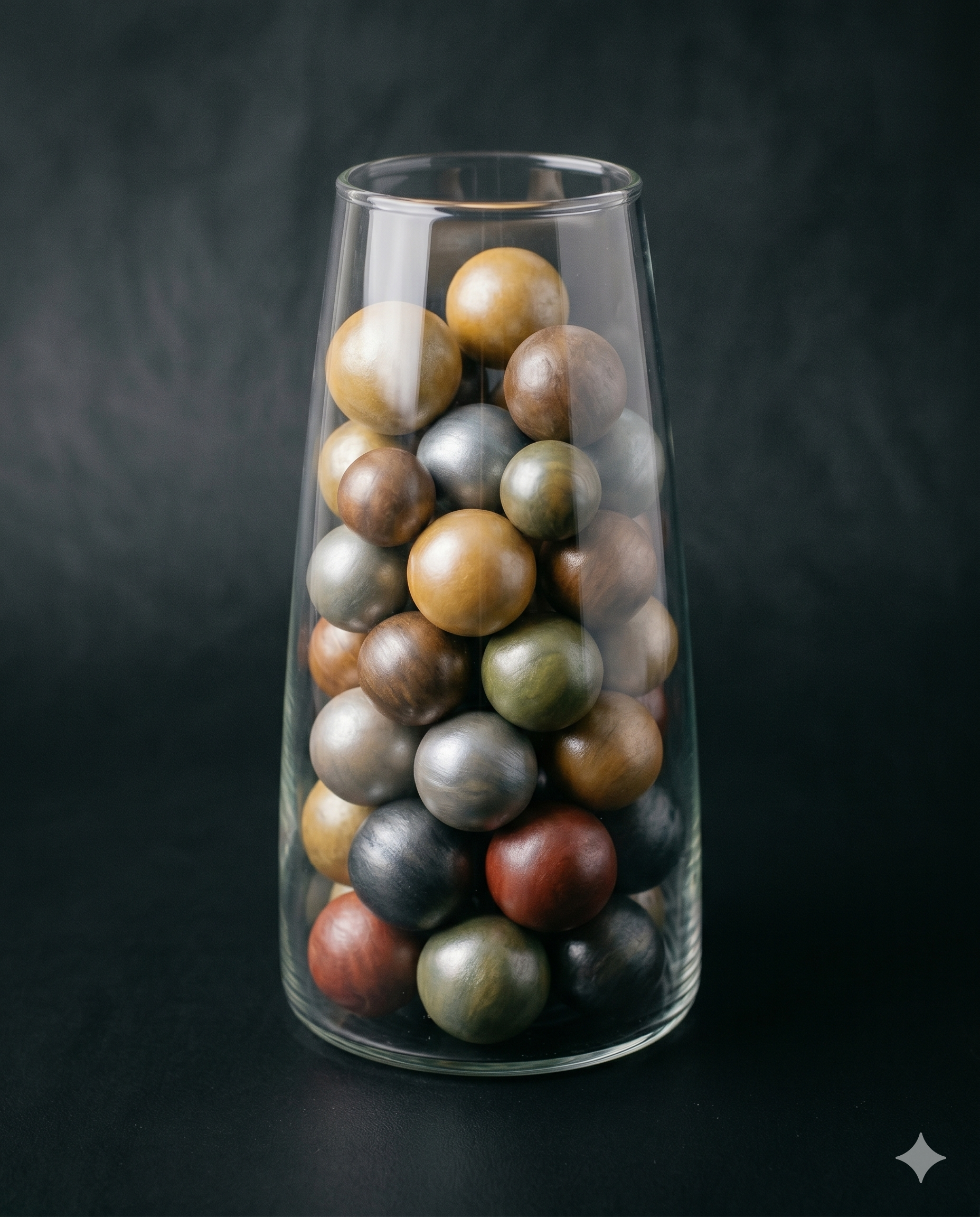
- Granulation. Cremains are loaded into a pan-tilted aggregator. As the pan rotates, a fine mist of colloidal silica binder is applied. Within minutes, the cremains form into pearls 25-40 mm in diameter — between marble-sized and small golf-ball-sized.
- Curing. Pearls are removed from the aggregator and air-cured on a labeled tray for 24-48 hours.
- Hand-painting. Each pearl is painted by hand with a slurry of cremains and natural pigments — mica, pearlescent, North Georgia mineral oxides. No two pearls are identical. The painting carries the cremains into the surface itself, not just an applied coating.
- Polishing & sealing. Pearls are polished to a satin finish and sealed with a clear UV-stable coating.
- Inspection & chain-of-custody check. Visual inspection. Every pearl in the batch is photographed against the chain-of-custody label.
- Delivery. Pearls ship in protective packaging with a hand-written note from the workshop. The chain-of-custody record is delivered with the pearls.
Stream B — Memorial Soil (private NOR + cedar planter)

- Intake. The pet arrives at the workshop. Chain-of-custody label applied. Weight recorded.
- Vessel loading. Pet is loaded into the appropriate Jora vessel — JK270 dual-chamber for Tiny tier, JK400 for Small-Medium and Large. Carbon-rich bulking material (alfalfa, straw, sawdust) layered around the remains.
- Active composting (NOR). Forced-aeration cycle runs the vessel through Natural Organic Reduction. Internal temperatures hold at 130-160 °F per Georgia mortality composting law. Probes log temperature and moisture continuously.
- Transfer to cedar curing vessel. Active material moves into a hand-built Western red cedar planter — the same planter that will be returned to the family — for the 45-day stabilization phase.
- Stabilization (45 days). Soil cures in the cedar vessel at ambient temperature. Carbon and nitrogen rebalance. The soil finishes dark, fine, and ready to plant.
- Surplus disposition. Every Stream B order returns the same standardized 1.5 cu ft of soil regardless of pet size. Surplus mass feeds the Mother Pile — the active hot inoculant pile at the workshop that seeds new vessel cycles. Finished memorial soil also plants the Unconditional Forest, the memorial grove on the property. No remains are ever discarded.
- Delivery. Cedar planter and soil ship together in a single carton. The planter is the same vessel that served as the curing chamber — it's returned to the family ready to plant.
Chain-of-custody
Every Stream A and Stream B order is tracked with a physical chain-of-custody label that stays with the material from the moment it arrives at the workshop until it ships back to the family. The label travels with the cremains through sieving, granulation, curing, painting, polishing, and packaging — or with the pet through vessel loading, active composting, stabilization, and packaging. The chain-of-custody record is delivered with the order. No remains are ever pooled, mixed, or co-mingled with another family's material across Stream A or the private side of Stream B.
The only place material is intentionally combined is Line 3 community composting — a separate, opt-in program where families choose communal composting with shelter animals. Line 3 is its own track, fully disclosed up front, with its own labeling and its own delivery format.
Mother Pile and Unconditional Forest
Some pets yield more than 1.5 cu ft of finished soil. The standardized return keeps shipping predictable for every customer regardless of pet size, but the surplus needs a home. Two destinations on the workshop ground:
- Mother Pile — the active hot inoculant pile. Surplus mass from larger pets feeds the pile, which is hot and microbially live; it seeds new vessel cycles. Operational asset.
- Unconditional Forest — the memorial grove on the property. Trees and native plantings go into the ground using finished memorial soil. The forest is where the soil itself feeds back into the land that made it.
Customers who place a Stream B order are notified at intake about both destinations and what surplus disposition looks like. Photos of the Mother Pile and the Unconditional Forest are part of the brand story.
What Legacy Soil & Stone does not do
- Whole-body human Natural Organic Reduction. Legal in Georgia under Senate Bill 241 (2025), but not a Legacy Soil & Stone offering. The Pearl Method (Stream A) carries the human cremains use-case.
- Livestock or non-mammalian-pet processing. Stream A's 9-lb acceptance cap and Stream B's 40-lb pet cap keep both streams focused on family memorial work.
- Co-mingling between streams. Cremains from Stream A and remains from Stream B never share a process step.
- Pooling within a stream. Each Stream A and private Stream B order is processed independently; one family, one batch, one chain-of-custody label.